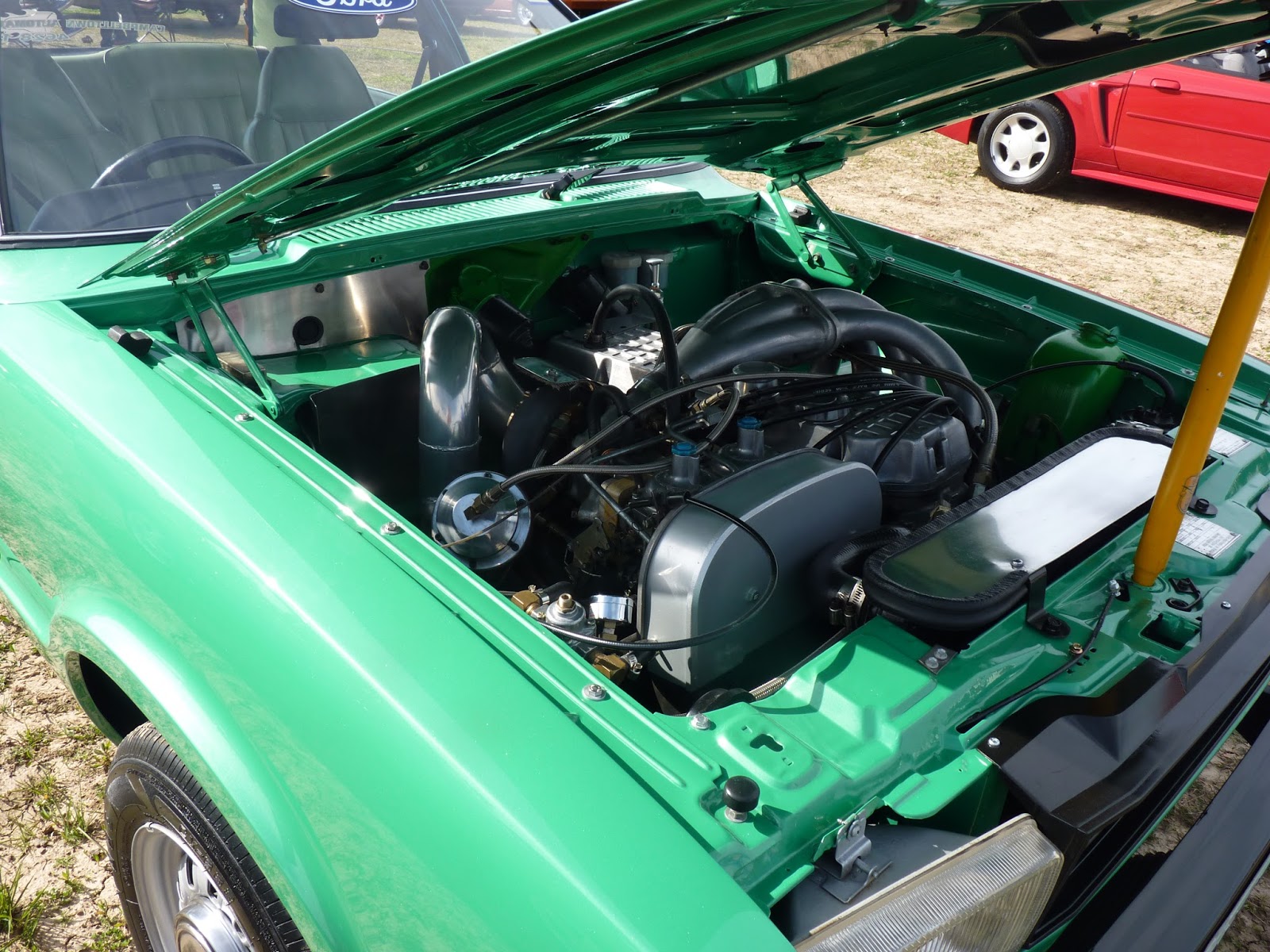
Attended the All Ford Day in Eastern Creek about 45mins out of Sydney it was at the carpark beside the Drag strip on the back of the recently refurbished / extended track.
Weather was great 22, and no wind pretty mint day. A sprinkling of photos below from the day...
RS500 with the 8 injector larger turbo, had the plaque on the window switches as well, was immaculate
Rwd sapphire on speedlines very tidy, std other than turbo hangar , alloy radiator
Mint 2 door on standard wheels
Another tidy 2 door on black ROH Astrons
2 Door on TSW's
32? side valve V8
Fast back 69 Mustang was immaculate detail every original tag was on it..
Mint RS3100
Falcon, was a little rough was literally rows and rows of them, loving the old school colours
GT40, looked like an original steel body, even had the rear light that was suppose be off Lancaster Bombers
V6 prefacelift MK1 Capri had a triple setup downdraft similiar to Ric Woods typical manifolds, deep dish rs4 spoke reproduction wheels
This was a mk1 Escort 2 door, had a injected turbo pinto
Ratty patina on this Falcon Futura was a pleasant change
4 door MK2 GT cortina
MK4 Cortina, over in Australia they came out with a 6 cylinder Falcon engine standard this had been turbo'd as well with a suck through, twin SU setup, very trick exhaust manifold.
Cobra Falcon on original Globes
Canadian imported Model A very original
MK3 Escort was coupled nicely with a Transit van.
This blog will be about car shows that I review and anything (mainly) ford related that I stumble upon on my travels...
Monday, 29 July 2013
Thursday, 27 June 2013
Intercooler and Hosing
For my 2wd sapphire cosworth, I have been looking at upgrading my intercooler and associated pipework and blow off valve (or dump valve). Again most parts needed to do this are all available through UK.
At the moment I have the standard intercooler , blow off valve, and air box.
I have briefly looked into intercoolers for the people in Australia and New Zealand there is a universal RS500 type one regularly listed on trademe (also a radiator) they are a very reasonable price, but this is a generic one and they did not sound like they were exactly made for the model car. For instance I enquired about the radiator and they dont have a location for the fan switch. The sellers name is "redlinevip", it is a cheap option if you dont mind altering brackets and getting a boss for the temperature sender / blow off valve etc fabricated....
http://www.trademe.co.nz/stores/redline-performance-2012

The other option for New Zealand and Australian's is to use Lodge Auto in Hastings Nz, http://www.lodgeautocentre.co.nz/cosworth.html.
After inquiring on the RS owners club forum (www.rsownersclub.co.uk) they recommended a 'Pro Alloy RS500 Spec R' with a (Garrett core) after I mentioned I was thinking of going with 'Airtek'. They had a write up in Classic Ford magazine testing the intercoolers and Airtek was the best value for money.
You can see from the pics below down one of the inlet pipes the Spec R one and the core and how many fins there are
Below is a pic of mine standard
I puchased mine from Matt Lewis Motorsport via Ebay,(SFS Silicone Boost Hose Kit - RS Cosworth 2wd T3 Turbo ) he has an extensive range of products listed online, and is also great communication wise and slightly cheaper than the likes of Burton power.
http://www.mattlewismotorsport.co.uk/
The existing blow off valve is fitted tee-ed off the intercooler and re-circulates back to the air filter intake pipe.
When you upgrade the intercooler you are generally expected to upgrade the blow off valve and the hoses at the same time.With the new hoses for the inlet manifold to intercooler pipe there should now be a tee for a blow off valve close to the throttle body, this is so when you put the new intercooler in that you move the blow off valve closer to the inlet. The new turbo to air filter pipe will no longer have the recirculating pipe coming into it as well, and the blow off valve will now vent to atmosphere.
See pic below (its a mis match of colours) the large blue pipe (turbo to air filter) no longer has the blow off valve outlet pipe coming into it. The yellow pipe for the inlet manifold to intercooler pipe now has a tee with a blow off valve on it. The red pipe from the turbo outlet to intercooler stays the same but if you get a kit with all 3 pipes its worthwhile replacing it at the same time.
I tried to find out if theres any difference between the 4wd and the 2wd pipe lengths someone mentioned on one of the forums that the 2wd one was slightly longer. But from the sounds of it if you were going to get second hand pipes they probably would all fit both models.
I have complied all the bits for my car and will take a few pics when I eventually get around to doing some much needed work on it.
Here is a link from the RS forums website of someone else with an Airtek intercooler fitted...

At the moment I have the standard intercooler , blow off valve, and air box.
I have briefly looked into intercoolers for the people in Australia and New Zealand there is a universal RS500 type one regularly listed on trademe (also a radiator) they are a very reasonable price, but this is a generic one and they did not sound like they were exactly made for the model car. For instance I enquired about the radiator and they dont have a location for the fan switch. The sellers name is "redlinevip", it is a cheap option if you dont mind altering brackets and getting a boss for the temperature sender / blow off valve etc fabricated....
http://www.trademe.co.nz/stores/redline-performance-2012
The other option for New Zealand and Australian's is to use Lodge Auto in Hastings Nz, http://www.lodgeautocentre.co.nz/cosworth.html.
After inquiring on the RS owners club forum (www.rsownersclub.co.uk) they recommended a 'Pro Alloy RS500 Spec R' with a (Garrett core) after I mentioned I was thinking of going with 'Airtek'. They had a write up in Classic Ford magazine testing the intercoolers and Airtek was the best value for money.
You can see from the pics below down one of the inlet pipes the Spec R one and the core and how many fins there are
Verus the Airtek one....
For me it is down to budget and I have since purchased a 60mm Airtek intercooler. I have yet to fit it.
With the hoses you generally buy a set of three:
-Air filter to Turbo
-Intercooler to inlet manifold
-Turbo to intercooler
Below is a pic of mine standard
I puchased mine from Matt Lewis Motorsport via Ebay,(SFS Silicone Boost Hose Kit - RS Cosworth 2wd T3 Turbo ) he has an extensive range of products listed online, and is also great communication wise and slightly cheaper than the likes of Burton power.
http://www.mattlewismotorsport.co.uk/
The existing blow off valve is fitted tee-ed off the intercooler and re-circulates back to the air filter intake pipe.
When you upgrade the intercooler you are generally expected to upgrade the blow off valve and the hoses at the same time.With the new hoses for the inlet manifold to intercooler pipe there should now be a tee for a blow off valve close to the throttle body, this is so when you put the new intercooler in that you move the blow off valve closer to the inlet. The new turbo to air filter pipe will no longer have the recirculating pipe coming into it as well, and the blow off valve will now vent to atmosphere.
See pic below (its a mis match of colours) the large blue pipe (turbo to air filter) no longer has the blow off valve outlet pipe coming into it. The yellow pipe for the inlet manifold to intercooler pipe now has a tee with a blow off valve on it. The red pipe from the turbo outlet to intercooler stays the same but if you get a kit with all 3 pipes its worthwhile replacing it at the same time.
I tried to find out if theres any difference between the 4wd and the 2wd pipe lengths someone mentioned on one of the forums that the 2wd one was slightly longer. But from the sounds of it if you were going to get second hand pipes they probably would all fit both models.
I have complied all the bits for my car and will take a few pics when I eventually get around to doing some much needed work on it.
Here is a link from the RS forums website of someone else with an Airtek intercooler fitted...

http://www.rsownersclub.co.uk/rsocbb/showthread.php?t=532345&highlight=intercooler
Again over in New Zealand / Australia if you were on a budget you could probably get the hoses made from any performance car company such as racepro / kendalls /edgells who would probably send off to get Samco pipes made. And you could just use a generic intercooler like Evo or GTR but because its a cossie I think its worth spending the cash and have a tidy install.
Tuesday, 25 June 2013
Fish & Chips (Cosworth)
For my 2wd Sapphire Cosworth I have been looking for an aftermarket chip. I have picked up after skimming the net and reading various posts that there are 3 main stages people tend to go for.
The Ecu chips are tailored to match with your injectors , turbo , wastegate actuator, head modifications to port sizes, cams, and exhaust / intercooler combination.
Stage one is basically a plug in chip it involves you opening up the ecu and replacing it with a different ecu chip. You will also need to unbolt the wastegate actuator and replace it with an after market "-31" actuator. You can use the standard actuator rod and it is connected to the actuator in the turbo with a 'c' clip. The benefits you will get will be an increase in power, it will run higher boost, and may be more economical than the standard or earlier model ecu mappings as well. Power depends on what tuner you go with 270~hp is generally what you would expect. Generally most people upgrade the intercooler to a RS500 style one at the same time, sometimes new alloy radiator and exhaust. And generally also put in a GP A style coil. The chip when you purchase it will come with instructions. This should give you recommendations for adjusting the CO mixture screw , spark plug gap sizes, and fuel presure etc.
Stage two, is similiar to stage one with the addition of higher flow injectors, and either standard or upgraded turbo to T34. You also need to upgrade to a 3 bar map sensor, and different wastegate actuator.
Stage 3, is higher flow injectors and T34 turbo, 3 bar map sensor, and different wastegate actuator.
And so on for Stage 4,5...
Being on a tight budget and wanting reliability for my sapphire 2wd cosworth I am looking at a stage 1 chip for the L6 computer. I will also do the intercooler and actuator and group A coil at the same time.
It should be noted that with any chips you should have it professionally tuned on a rolling road etc. To ensure fueling is correct.
L1 and L6 chips can be swapped between ecu's apparently but none of the others.
http://passionford.com/forum/ford-sierra-sapphire-rs500-cosworth/300482-ecu-swap-l1-to-l6.html
The main suppliers that I could find that do aftermarket chips that had fairly good reviews were:
-Superchip
http://www.superchips.co.uk/newspage/23
-MSD
http://www.motorsport-developments.co.uk/rs_cosworth_ecu_chips.html
-Graham Goode GGR
http://www.grahamgoode.com/old/cosworth/ecu.htm
-Ahmed Bayjoo
(c/o/ Burtons) http://www.burtonpower.com/parts-by-brand/brands-a-to-b/burton-bayjoo-chips.html?appl_engine=18
-Collins Power Chip
http://www.collinsperformance.com/performance-package-deals-ford-escort-cosworth/
If you dont want to use a fixed mapped chip,maybe because you will be altering the setup constantly, live mapping of the Ecu's is available from the likes of this company 'rp-lab'. The main advantage of this other than an aftermarket Ecu (Link / megasquirt...) is that you do not need to alter your wiring loom, or sensors.
http://rp-lab.com/map_editor.shtml
All of the chip Ecu and stages information is outlined under Motorsports developments website. And Graham Goode Racing website.
http://www.motorsport-developments.co.uk/rs_cosworth_ecu_chips.html
http://www.grahamgoode.com/old/cosworth/ecu.htm
These screen grabs are straight out of Motorsport Developments website
L1 Ecu
L8 Ecu
P8 Ecu
EEC IV Ecu
The Ecu chips are tailored to match with your injectors , turbo , wastegate actuator, head modifications to port sizes, cams, and exhaust / intercooler combination.
Stage one is basically a plug in chip it involves you opening up the ecu and replacing it with a different ecu chip. You will also need to unbolt the wastegate actuator and replace it with an after market "-31" actuator. You can use the standard actuator rod and it is connected to the actuator in the turbo with a 'c' clip. The benefits you will get will be an increase in power, it will run higher boost, and may be more economical than the standard or earlier model ecu mappings as well. Power depends on what tuner you go with 270~hp is generally what you would expect. Generally most people upgrade the intercooler to a RS500 style one at the same time, sometimes new alloy radiator and exhaust. And generally also put in a GP A style coil. The chip when you purchase it will come with instructions. This should give you recommendations for adjusting the CO mixture screw , spark plug gap sizes, and fuel presure etc.
Stage two, is similiar to stage one with the addition of higher flow injectors, and either standard or upgraded turbo to T34. You also need to upgrade to a 3 bar map sensor, and different wastegate actuator.
Stage 3, is higher flow injectors and T34 turbo, 3 bar map sensor, and different wastegate actuator.
And so on for Stage 4,5...
Being on a tight budget and wanting reliability for my sapphire 2wd cosworth I am looking at a stage 1 chip for the L6 computer. I will also do the intercooler and actuator and group A coil at the same time.
It should be noted that with any chips you should have it professionally tuned on a rolling road etc. To ensure fueling is correct.
L1 and L6 chips can be swapped between ecu's apparently but none of the others.
http://passionford.com/forum/ford-sierra-sapphire-rs500-cosworth/300482-ecu-swap-l1-to-l6.html
The main suppliers that I could find that do aftermarket chips that had fairly good reviews were:
-Superchip
http://www.superchips.co.uk/newspage/23
-MSD
http://www.motorsport-developments.co.uk/rs_cosworth_ecu_chips.html
-Graham Goode GGR
http://www.grahamgoode.com/old/cosworth/ecu.htm
-Ahmed Bayjoo
(c/o/ Burtons) http://www.burtonpower.com/parts-by-brand/brands-a-to-b/burton-bayjoo-chips.html?appl_engine=18
-Collins Power Chip
http://www.collinsperformance.com/performance-package-deals-ford-escort-cosworth/
If you dont want to use a fixed mapped chip,maybe because you will be altering the setup constantly, live mapping of the Ecu's is available from the likes of this company 'rp-lab'. The main advantage of this other than an aftermarket Ecu (Link / megasquirt...) is that you do not need to alter your wiring loom, or sensors.
http://rp-lab.com/map_editor.shtml
All of the chip Ecu and stages information is outlined under Motorsports developments website. And Graham Goode Racing website.
http://www.motorsport-developments.co.uk/rs_cosworth_ecu_chips.html
http://www.grahamgoode.com/old/cosworth/ecu.htm
These screen grabs are straight out of Motorsport Developments website
L1 Ecu
L6 Ecu
L8 Ecu
P8 Ecu
EEC IV Ecu
Wednesday, 19 June 2013
Cosworth Ecu's for Dummies
I have been looking at what options are available for my 1989 2wd Sapphire Cosworth.
There are two things to consider for a cosworth the computer (ecu) and the chip you are running with it.
Mine has a standard computer (L6) and I havent opened it up yet to see whether it has an aftermarket chip.
In New Zealand and Australia there is not alot of cosworths or tuners around. And I have struggled to work out what computers come with what cosworth vehicles, and what you can interchange.
A few of the owners in NZ have opted for aftermarket computers suck as Link, Autronic etc
James at Motorsport developments gave a brief summary of the different types of computers.
L1, yellow global mod screw, ecu has mounting wings
L6, white global mod screw, ecu has mounting wings
L8, white global mod screw, ecu has no wings,
P8, no global mod, no wings
http://passionford.com/forum/technical-help-q-and-a/346481-cosworth-ecu-identification.html
N.B. The First 2 letters refer to the name of the ECU, the screw he is talking about is externally on the ecu see pic , they are different colours, and the wings he is talking about is the external casting onto the casing of the ecu.
It is also shown and discussed in great detail in this great website:
http://www.bigturbo.co.uk/main1.htm
L1
L6
There are two things to consider for a cosworth the computer (ecu) and the chip you are running with it.
Mine has a standard computer (L6) and I havent opened it up yet to see whether it has an aftermarket chip.
In New Zealand and Australia there is not alot of cosworths or tuners around. And I have struggled to work out what computers come with what cosworth vehicles, and what you can interchange.
A few of the owners in NZ have opted for aftermarket computers suck as Link, Autronic etc
James at Motorsport developments gave a brief summary of the different types of computers.
L1, yellow global mod screw, ecu has mounting wings
L6, white global mod screw, ecu has mounting wings
L8, white global mod screw, ecu has no wings,
P8, no global mod, no wings
http://passionford.com/forum/technical-help-q-and-a/346481-cosworth-ecu-identification.html
N.B. The First 2 letters refer to the name of the ECU, the screw he is talking about is externally on the ecu see pic , they are different colours, and the wings he is talking about is the external casting onto the casing of the ecu.
It is also shown and discussed in great detail in this great website:
http://www.bigturbo.co.uk/main1.htm
L1
L6
L8
P8
The chip from within the ECU that gets replaced is shown on the pic below, (N.B. This particular one is an aftermarket chip)
With the ECU's I am going to stay with the L6 for my particular car (down to cost), and get a chip sorted to suit.
For a 2wd removing the L6 and replacing it with a L8 is a common upgrade.
One of the benefits is that the L8 allows lambda closed loop , (which most modern cars have), which uses readings from a exhaust sensor and the computer / chip optimises the fuel / air ratio for lower rev range to replace the mapping of the chip. In the upper range it will revert back to the chip readings.
With the L8 closed loop conversion you also need to change the TPS (throttle position sensor from a PF01 (2wd) to PF09 (4wd) and the wiring to the TPS from the ecu as well. And you will need to put in a lamda (exhaust) sensor.
TPS sensors are explained also on http://www.bigturbo.co.uk/
More information on the closed loop is available from this other great UK website and supplier:
http://www.motorsport-developments.co.uk/closedloop.html
Saturday, 15 June 2013
Intro
Although cosworth's original link with Ford was with the Formula Junior engine of 1960, the first cosworth badged Ford car did not appear until 1985. Although Cosworth had already developed many fine engines for Ford-the DFV F1 engine, and the all-purpose belt driven BDA four cylinder power unit among them-the first Ford to carry the Cosworth badge was the now legendary Sierra RS Cosworth.
In the next decade, the two companies co-operated in the evolution of a series of Cosworth-based road cars that built up a phenomenal reputation, not only on the road, but also in racing and rallying.....
To follow up cars like the Escort RS saloons and the RS200, where Cosworth's involvement was always hidden, Ford first put the flamboyantly styled Sierra RS Cosworth on sale. After three generations of that model had been built, the more specialized and even more advanced Escort RS Cosworth range took its place. Along the way, too, Cosworth produced the silky smooth V6 engines that powered the Scorpio 24v, this proving that high power could be delivered with the minimum fuss..."
Graham Robson, Cosworth and Ford, THE ROAD CARS, The Insiders view, 2006
This blog will be about anything (mainly) ford related that I stumble upon on my travels...
In the next decade, the two companies co-operated in the evolution of a series of Cosworth-based road cars that built up a phenomenal reputation, not only on the road, but also in racing and rallying.....
To follow up cars like the Escort RS saloons and the RS200, where Cosworth's involvement was always hidden, Ford first put the flamboyantly styled Sierra RS Cosworth on sale. After three generations of that model had been built, the more specialized and even more advanced Escort RS Cosworth range took its place. Along the way, too, Cosworth produced the silky smooth V6 engines that powered the Scorpio 24v, this proving that high power could be delivered with the minimum fuss..."
Graham Robson, Cosworth and Ford, THE ROAD CARS, The Insiders view, 2006
This blog will be about anything (mainly) ford related that I stumble upon on my travels...
Fordtopia
"a genius can make for a penny what a good engineer can make for 10p"
Keith Duckworth, Co-founder Cosworth Engineering
Subscribe to:
Posts (Atom)